During his visit to the UK, Carlos Mazón, President of the Valencia Region, announced that EasyJet is set to establish a new base at the Alicante-Elche Miguel Hernández Airport. From this base, the airline will introduce nine new routes connecting with the UK, France, Switzerland, and the Czech Republic.
This development was confirmed following a meeting with representatives from the British airline, who reaffirmed their dedication to the Valencian Community. This will be EasyJet’s fourth base in Spain, operational from March 2024, and is expected to generate around 100 new jobs.
Mazón has confirmed that these new connections will facilitate the arrival of approximately 125,000 passengers to the region during the next summer season, promising a significant economic boost for the local tourism industry. This comes amidst concerns that the airport is currently under pressure to handle the surge in summer traffic, with ongoing debates about the need for a second runway and improved public transport links.
The new routes will specifically link Alicante to Southampton and Zurich starting from 31 March next year, and to Newcastle, Belfast, Prague, Lyon, Lille, Nantes, and Nice from April and May 2024.
The establishment of these new air routes is particularly advantageous for the Alicante area, offering owners and visitors, especially golf enthusiasts, improved connectivity and access to one of Spain’s premier golfing destinations.
The introduction of the ETIAS (European Travel Information and Authorisation System) now has a confirmed start date for when it will become a requirement for UK citizens wishing to enter any of the 30 EU member states. This system, informally likened to a visa, is part of the new travel requirements following the UK’s exit from the EU. It is set to be a prerequisite for those planning to visit popular destinations such as Spain, Greece, France, and Italy, with a fee attached.
For a number of years, the launch of ETIAS has been in the pipeline, but its deployment has faced multiple delays. The system, which will cost around £6, exempts travellers below the age of 18, those above 80, and EU nationals from its requirement.
The latest updates from the Schengen Council indicate a new timeline for rolling out the necessary IT systems. These systems, essential for combating crime, managing borders, and overseeing migration flows, need to be operational before the ETIAS can take effect.
An Entry/Exit System is also being introduced to replace manual passport stamping with an electronic registration process. This system, along with the ETIAS—an online travel authorisation for visa-exempt third-country nationals, including UK citizens—is in the stages of implementation.
The roadmap for this new IT architecture suggests that the Entry/Exit System should be operational by Autumn 2024 and the ETIAS by Spring 2025. This means that from Spring 2025, UK citizens planning to visit EU countries will need to apply for ETIAS, which will cost £6 and remain valid for three years or until the passport expires, whichever is sooner. Applications for the ETIAS will be accessible via the official ETIAS website.
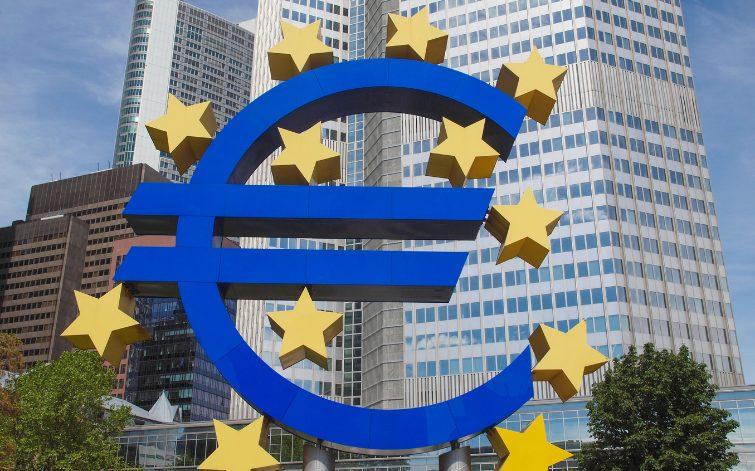
The European Central Bank is advancing its plans for the digital euro, with the Bank of Spain not only in support but also leading, being six months ahead of its counterparts. Spain’s interim Socialist Government has shown its inclination toward a cashless society, evident from its legislative measures limiting cash payments in excess of €2,000 and then €1,000
The attractiveness of a cashless society to many banks lies in the potential for transaction charges on card payments or transfers.
Interestingly, the Bank of Spain, although favouring the digital euro, commissioned market research firm IPSOS to gauge public sentiment.
These surveys, encompassing 1,600 individuals and small businesses, revealed limited knowledge and enthusiasm for the digital currency. Only 20% of respondents were familiar with the digital euro, and just 20% of businesses were open to accepting it.
Surprisingly, 65% explicitly expressed no intention to accept the digital euro, showing a 7% increase from a 2022 survey.
Among the 18-24 age bracket, seen as the most tech-savvy, only 36% were inclined to use the digital euro. This figure dwindles with increasing age, with a mere 7% of those over 65 favouring it.
Thus, while the digital euro might find its place in high-value transactions between corporations, it’s unlikely to be a prevalent payment method for everyday purchases in the near future.
This website uses cookies to improve your experience while you navigate through the website. Out of these, the cookies that are categorized as necessary are stored on your browser as they are essential for the working of basic functionalities of the website. We also use third-party cookies that help us analyze and understand how you use this website. These cookies will be stored in your browser only with your consent. You also have the option to opt-out of these cookies. But opting out of some of these cookies may affect your browsing experience.
This website uses cookies to improve your experience while you navigate through the website. Out of these, the cookies that are categorized as necessary are stored on your browser as they are essential for the working of basic functionalities of the website. We also use third-party cookies that help us analyze and understand how you use this website. These cookies will be stored in your browser only with your consent. You also have the option to opt-out of these cookies. But opting out of some of these cookies may affect your browsing experience.
Necessary cookies are absolutely essential for the website to function properly. These cookies ensure basic functionalities and security features of the website, anonymously.
Cookie
Duration
Description
cookielawinfo-checbox-analytics
11 months
This cookie is set by GDPR Cookie Consent plugin. The cookie is used to store the user consent for the cookies in the category "Analytics".
cookielawinfo-checbox-functional
11 months
The cookie is set by GDPR cookie consent to record the user consent for the cookies in the category "Functional".
cookielawinfo-checbox-others
11 months
This cookie is set by GDPR Cookie Consent plugin. The cookie is used to store the user consent for the cookies in the category "Other.
cookielawinfo-checkbox-necessary
11 months
This cookie is set by GDPR Cookie Consent plugin. The cookies is used to store the user consent for the cookies in the category "Necessary".
cookielawinfo-checkbox-performance
11 months
This cookie is set by GDPR Cookie Consent plugin. The cookie is used to store the user consent for the cookies in the category "Performance".
viewed_cookie_policy
11 months
The cookie is set by the GDPR Cookie Consent plugin and is used to store whether or not user has consented to the use of cookies. It does not store any personal data.
Functional cookies help to perform certain functionalities like sharing the content of the website on social media platforms, collect feedbacks, and other third-party features.
Performance cookies are used to understand and analyze the key performance indexes of the website which helps in delivering a better user experience for the visitors.
Analytical cookies are used to understand how visitors interact with the website. These cookies help provide information on metrics the number of visitors, bounce rate, traffic source, etc.
Advertisement cookies are used to provide visitors with relevant ads and marketing campaigns. These cookies track visitors across websites and collect information to provide customized ads.